

In the process of turning a short novel into a nearly eight-full-hours-long season of streaming TV, Mike Flanagan’s Prime Video-hosted take on Carrie takes some decidedly different approaches to numerous elements of Stephen King’s iconic story.
Various characters’ arcs are fleshed out, entirely new characters are added, themes are ruminated upon in a much more palpable and self-evident way. All together, these additions can be a bit of a mixed bag.
For example, the decision to turn the titular character’s mother, Margaret White (as played so phenomenally by Samantha Sloyan here) into a matriarch that Carrie has a much more nuanced and complicated relationship with than the stark black-and-whites of the original novel or 1976 Brian De Palma film is a great call that allows the longer runtime to really build to the various crescendos their relationship reaches.
Carrie is the best part of Carrie

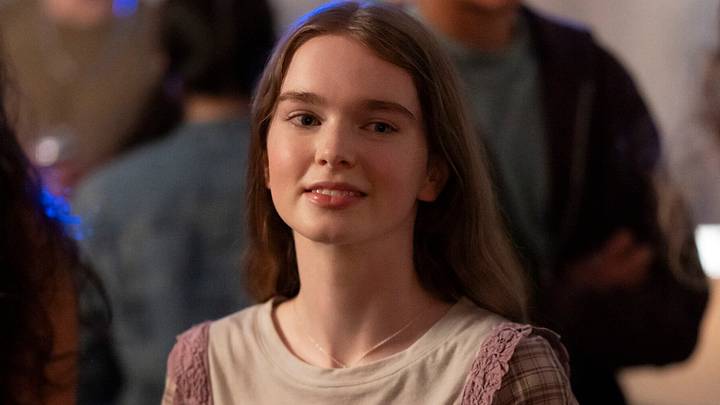
But simultaneously, something like the decision to populate the series with a whole host of new telekinetically-gifted characters is a bit strange. But for all the changes made, the single greatest element of Flanagan’s new series is its namesake; Carrie White herself (as played by Summer H. Howell) is the best part of the new Carrie series.
In the mid-‘70s, it was slightly unbelievable that a teenage girl wouldn’t know what her first period was, to the point that De Palma’s film literally includes dialogue of teachers debating how such an absence of knowledge was even possible in the then-modern times.
In order to preserve the impact of that famous first beat for Carrie White, where she gets her first period in the gym locker room and is petrified of it and subsequently bullied by the other girls, Flanagan’s series makes some substantial changes to Carrie’s childhood. Rather than being raised by an ultra religious single mother, this Carrie was raised by a mother and father, but kept entirely secluded from the world.
As detailed in the debut episode, “First Period,” very few people even knew Carrie White existed. That is, until her father unexpectedly dies on a construction job and the White family’s whole world falls apart.
This results in Carrie being sent to a public high school for the very first time, when she has rarely even been allowed outside the confines of her family home. She has no phone, she doesn’t know what the internet is, and has no idea what the larger culture of her peers is when she enters the school.
A new version of the iconic character

This makes her a fish-out-of-water in the most literal of ways, and allows the “plug it up” beat that concludes that debut episode to feel earned and impactful. And it could have just been for those purposes alone, but Flanagan and his collaborators carry this creative process through in superb fashion, resulting in a wholly new version of Carrie White.
By repositioning the character in this way, audiences are treated to an entirely different take on Carrie. In King’s novel and De Palma’s film, Carrie has already been subjected to years-upon-years of bullying and abuse from her classmates by the time audiences are introduced to her. She’s a beaten down character, inherently.
And yet Flanagan’s take on the character is one that is open and earnest in such sincere ways. She has been locked away from the world and is so joyous to be entering into it, which makes the inevitable tragic elements of her story all the more tragic to behold.
A gargantuan part of all of this is Howell’s performance, which is absolutely stunning. She is able to channel key elements of Sissy Spacek’s performance from the 1976 film (keep an eye out for the ways in which she turns the way Carrie walks into a mini-arc all its own throughout the series) while also bringing something entirely fresh and new to the table.
You fully believe that this version of Carrie is just a carefree girl who is so obscenely happy to be meeting new people and experiencing new things.
The series takes its time sowing the seeds of Carrie’s ultimate descent into madness, and yet Howell never loses sight of the bright-eyed young woman beneath all the struggle and hardship. It’s absolutely beautiful and is what stuck with me most about Mike Flanagan’s Carrie: how some really insightful craftsmanship and Summer H. Howell’s remarkable performance breathed a whole new kind of life into Carietta White, decades later.
 Add us as a preferred source on Google