

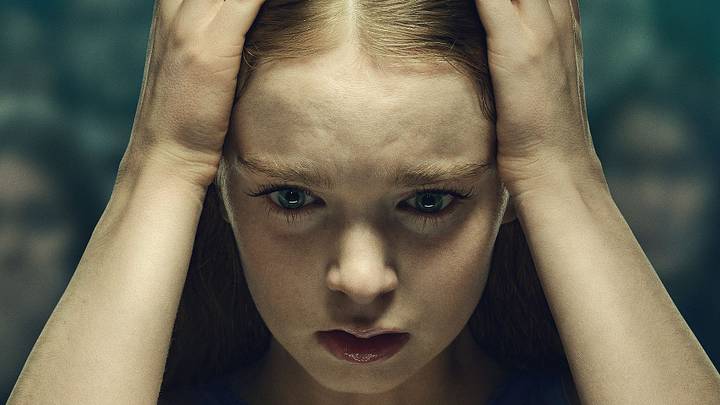
For 50 years now, anyone making a new version of Carrie has had to contend with the same two nigh impeachable high-water marks: Stephen King’s original 1974 novel and Brian De Palma’s 1976 film.
The book was King’s first-ever published novel, and De Palma’s film was the first-ever cinematic adaptation of King’s work, as a result. Both of these works have stood the test of time, enduring across decades and resonating with entire new generations of fans because they’re just that great. But that certainly hasn’t stopped other filmmakers from attempting to tackle the story all over again in the years that have followed.
There was the 1999 attempt at making a sequel to De Palma’s film, titled The Rage: Carrie 2. There was the 2002 made-for-TV remake, which aired on NBC, simply titled Carrie. Then there was the 2013 theatrical remake, again simply called Carrie.
For as much effort as went into the construction of these various projects over the years though, none of them have been particularly remembered for being well-liked takes on the material, which is a fact that hangs heavy over the new release of Mike Flanagan’s Prime Video Carrie series.
With a phenomenal team behind it, a primetime October release date, and aspirations for further seasons, it’s clear that this new Carrie longs to build upon the legacy of King’s and De Palma’s respective classic iterations, and nowhere is that more apparent than in the strange placement of an Easter egg in the new series’ finale.

For as much as Flanagan’s take on Carrie changes about the source material (the setting has been updated to the present-day, characters’ arcs have been drastically expanded, the cast of the school has been fleshed out), there’s also a lot that it stays very true to.
There are even moments throughout the series that are clearly in conversation with De Palma’s film, whether that be through paying visual homage to it (split-diopters) or positioning key moments in direct opposition to it (Flanagan films Carrie’s prom night win and eventual blood-letting in such a stark matter-of-fact fashion that it contrasts directly against De Palma’s operatic take on the material in deliberate ways).
Carrie burns down a Brian De Palma retrospective
But the final episode of Flanagan’s Carrie goes out of its way to name-check De Palma himself, and it’s… well, it’s an undeniably weird moment.
The finale of Carrie changes a lot of King’s book and De Palma’s film’s most defining beats, and takes some big swings that don’t necessarily connect in the way it feels like they should. The result is a finale that often feels as if it is actively undermining much of the work that earlier episodes of the series did, and unfortunately, it is square in the middle of some of the most baffling additions that the show decides to reveal that the local theater in Chamberlain, Maine is showing a De Palma retrospective.
That’s a nice nod to the iconic filmmaker, but the thing that makes it odd is that the show only reveals this as the fire engulfing the whole town reaches the theater. So to reiterate in wholly objective terms, the Easter egg is that the new Carrie series is burning down a retrospective to De Palma’s career.
This is a strange choice, and it showcases how a bunch of independently good ideas can be layered on top of one another to result in a singular bad idea.
The choice to directly reference De Palma’s seminal work in this way is great. The choice to go further than any other on-screen adaptation of Carrie had before and fully commit to the character burning down the town during her rampage is also great. But when you put both of those ideas together, you get some unfortunate messaging being baked into what was clearly meant to be a fun reference.
 Add us as a preferred source on Google