

With the release of Mike Flanagan’s new Amazon Prime series Carrie imminent, it’s worth reflecting upon the writer-director-showrunner’s role in the landscape of modern horror entertainment. In many ways, Carrie is a project that fits distinctly into Flanagan’s wheelhouse; it’s a Stephen King adaptation (Flanagan will have now been behind four Stephen King adaptations and has at least two more on the way in the form of new takes on The Dark Tower and The Mist), it’s a multi-episode horror series, and it seeks to blend character-driven drama with supernaturally-tinged horror. But in many ways, it’s also a distinctly new era for the filmmaker’s career; it is the first streaming project he has completed away from Netflix, the studio and platform that he initially rose to such acclaim on.
Across the 2010s, Flanagan put in the work to rise through the ranks of notable horror filmmakers. He made small-budget films like Absentia, Oculus, and Hush before graduating to the slightly bigger leagues of something like Blumhouse’s Ouija: Origin of Evil, where he was working with his biggest budget to date and earned stellar reviews. It was with this body of work and strong reputation that he teamed with Netflix to make Gerald’s Game (his first Stephen King adaptation) and then embark on his first TV project, The Haunting of Hill House, which would serve to usher in a new era of horror adaptations on television.
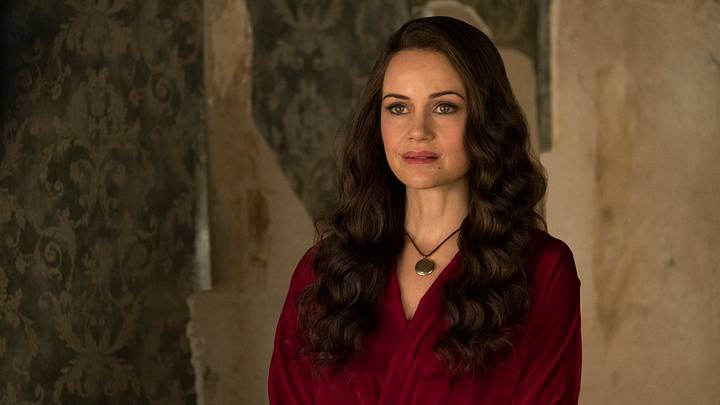
The Haunting of Hill House is an adaptation of Shirley Jackson’s 1959 novel and sees Flanagan serving as the showrunner, writer, occasional editor, and full-time director for all ten episodes. It is extremely unusual for a creative to be this hands-on involved in a project, and it's notably something that Flanagan would avoid doing again for the vast majority of his subsequent television projects (with Midnight Mass, his masterpiece, serving as the exception).
What’s so fascinating about Flanagan’s take on Jackson’s material is just how different it is. Jackson’s novel had previously been adapted into the 1960 Robert Wise-directed horror classic, The Haunting, which was a fairly straightforward run at the content of the book. Flanagan elected to go a different path, eschewing the opportunity to simply elongate the initial story into a ten-hour-long series and instead crafting a new take on the material that was true to the heart, tone, and artistic ethos of Jackson’s work.
The resulting series is not just a new take on Hill House but rather a recontextualization of the story. Flanagan and his team sought to interrogate the text in a meaningful way and completely restructure the story in this hugely ambitious way, across multiple timelines and dozens of characters. The result was something truly spectacular, both incredibly scary and incredibly moving. The series debuted to huge numbers on Netflix in 2018 and earned rave reviews.
In the years that followed, Flanagan would go on to make a whole host of other seasons of television for Netflix, creating four new horror series over the course of three years for the streamer. But even that figure fails to illustrate just how pivotal a role Flanagan’s The Haunting of Hill House played in redefining what an adaptation of a beloved horror property could be. Its success, both on an artistic and commercial level, helped to illustrate that audiences were hungry for more than just the same stories being reheated in bland ways.
To this end, it’s a bit funny to see Flanagan now re-entering the landscape after several years away, with his adaptation of Carrie. He and his team truly had a hand in reshaping what audiences expect from their horror adaptations, and it will be fascinating to see how that plays out with the release of Carrie.
 Add us as a preferred source on Google