

David Fincher is a very meticulous guy. The director has now been working in the industry for four decades and has developed an increasingly exacting visual style within that time.
After a stumble out of the gate with the infamously heinous production of his feature debut, Alien 3 (no fault of his own), Fincher made what he now considers to be his debut proper in 1995 with the instant classic Se7en. In the thirty-plus years since then, he’s made pretty much exclusively phenomenal movies, all of which are nothing short of visual marvels. From The Game to Fight Club to Panic Room to Zodiac to The Curious Case of Benjamin Button to The Social Network to The Girl with the Dragon Tattoo to Gone Girl to Mank to The Killer, the filmmaker has developed a monumental and highly influential body of cinematic work.
But in addition to his work in features, Fincher also became one of the leaders of the streaming-age content, for better or worse. He made the leap to Netflix years before anyone else was really even taking the streamer seriously and created House of Cards in 2013, one of the platform’s earliest successes.
Since then, the filmmaker has consistently worked with Netflix, creating a litany of TV projects, from the animated Love Death + Robots to curating video essays with Voir. But undoubtedly one of the greatest accomplishments of his Netflix tenure was the series Mindhunter, which lasted two seasons before being unceremoniously canceled by the streamer. And in a new interview, David Fincher reveals that Netflix was game to continue with the series into further seasons, but only if some surprising changes were made to the show’s format and structure.
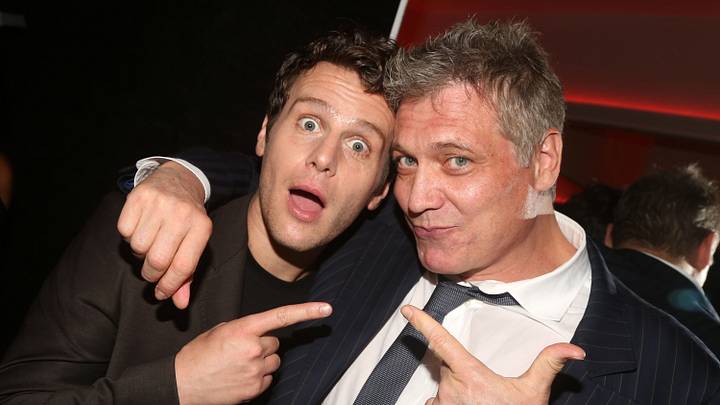
For the uninitiated, Mindhunter was a series set in the late ‘70s that chronicled the origins of the Behavioral Science Unit within the FBI. The show starred Jonathan Groff, Holt McCallany, and Anna Torv and was unanimously celebrated by critics upon release. Both seasons are great, but the first season of the show in particular is an absolute masterclass and one of the greatest seasons of television I have ever seen.
Having said that, the show's tone was far less that of a general police procedural and far more in line with Fincher’s own Zodiac, a contemplative, existential piece rooted in the details and obsessive nature of such work. And as it turns out, though Netflix was supportive of the vision, they were also keen to explore if some adjustments could be made to continue making the series while courting a larger section of the general audience.
As Fincher revealed on the Happy Sad Confused podcast, “Netflix said, ‘Look, we gotta be honest with you… there are two million people who love the show. And the show costs $100 million a season… and it’s basically guys with Styrofoam cups in their hands sitting at stainless steel tables getting the rundown. Is there anything you can do so this audience can grow?’ And I said, 'What do you mean?' And they said, ‘I don’t know, can they… will they ever run after somebody with a gun in their hand?’ And I said no. That’s not what it is.”
In Fincher’s words, all of this culminated with, "'Can you make concessions to get closer to CSI?’ And I said no. I can’t, I won’t, and I don’t think you really want me to.”
Ultimately, in order to justify its cost, Netflix needed Mindhunter to attract a larger audience than it was. Its proposed solution to this was to turn the series into a more general procedural, which would have in turn robbed the series of what made it so unique.
Rather than compromising the series in such a way, Fincher and Netflix came to a mutual understanding that the show would simply not continue on. It is a shame things happened this way, especially considering just how much money the streamer has wasted on completely insubstantial and buffoonish content in the years since, but I would much rather have two great seasons of Mindhunter existing in isolation than the series evolving into a bastardized version of itself in the name of commercial viability.
 Add us as a preferred source on Google