

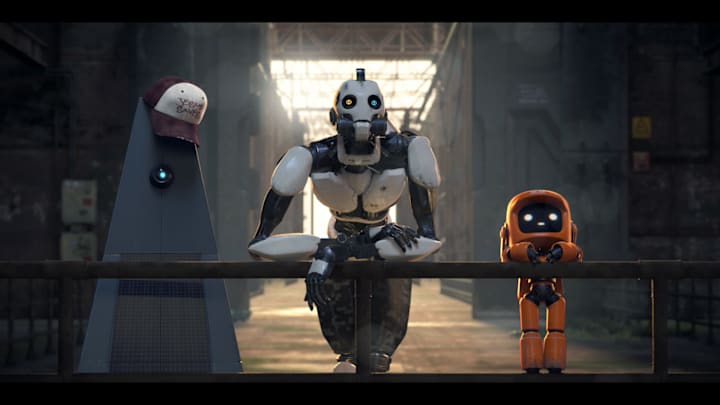
Some of the industry's most acclaimed writers and directors have worked on Love, Death & Robots, from J.T. Petty and Jennifer Yuh Nelson to David Fincher and Tim Miller. The lattermost name is also credited as showrunner, conceiving the idea of this animated anthology when deciding to remake Heavy Metal, a movie from the eighties.
Development hell ensued for their intended motion picture, as Miller and Fincher just couldn't find a studio willing to dish out the funds. Once the Deadpool franchise garnered Miller some popularity, the duo decided on striking a deal with Netflix.
Season one came out in 2019, and it was immediately heralded for its inventiveness, both in its world-building and in its plot. Airing its second and third seasons in 2021 and 2022, respectively, Love, Death & Robots had officially reached the level of mainstream popularity, becoming an absolute pillar of the exclusive Netflix library.
Season four was released in 2025, and it received tremendous praise from every perspective of reception. Many episodes therefrom are considered greats of the series, and the same thing goes for several other chapters from previous seasons of Love, Death & Robots.
The likes of "The Drowned Giant" and "Bad Travelling" are considered by fans and critics among the show's finest episodes, along with one called "Jibaro" as it came out in season 3. Through all of these episodes that have been called the best by sites like Netflix Tudum, one in particular seems to go unnoticed: "Life Hutch," the second episode of season two.
Love, Death & Robots season 2 episode 7 is an underrated gem
Adapted from a 1953 short story, “Life Hutch” stems from the mind of a bona fide sci-fi legend: Harlan Ellison. That talented author crafted a compelling plot about Terence, a pilot who encounters a haywire robot after crash-landing on a fictional planet.
Playing this lead character is famous American performer Michael B. Jordan, who binge-watched Love, Death & Robots at a friend’s recommendation and expressed great excitement in appearing within an episode himself. He got his wish, and viewers were better off for it as his lead character attempts to find shelter while an intergalactic battle takes place from up above.
He finds a haven in a place called a Life Hutch, wherein a maintenance robot malfunctions and battles against the protagonist. From one skirmish to another, Terence eventually reigns triumphant and ends the episode patiently waiting for backup. Compelling stuff thanks to Elison’s plot in tandem with Michael B. Jordan’s display, and while much more could be said about the episode's overall quality, most prominently worth noting would be the endless allure of its visuals.
In a Netflix interview with Michael B. Jordan, series creator Tim Miller, and “Life Hutch” director Alex Beaty, the team shone light on the extensive animation process that made the episode stick out. They utilized both live-action footage and computer-generated imagery to create a hybrid of visuals, with every episode of Love, Death & Robots featuring some of the most mesmerizing visuals you’re ever likely to see.
Animated by Blur Studio, flashbacks to Terence’s experiences in battle grant insight into his psyche, and fascinating point-of-view shots even show viewers the perspective of his aggressive robot combatant.
Elements of editing could also be delineated, but rest assured: "Life Hutch" achieves an impressive visual allure from its very opening frame, and when also accounting for its inventive plot in tandem with the performance from superstar Michael B. Jordan, this becomes an all-time great episode of Love, Death & Robots despite never being regarded as such.
 Add us as a preferred source on Google