

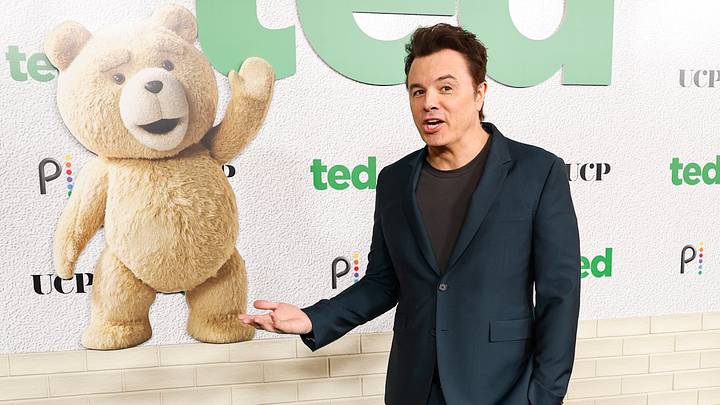
Seth MacFarlane is a man who wears many hats. In addition to being an actor and comedian in his own right (as well as an incredibly talented vocalist), MacFarlane has now been an obscenely prolific creative for more than two decades. Between works like Family Guy, The Cleveland Show, and American Dad, he has been behind dozens of seasons of television, and shows no real signs of slowing down anytime soon. Back in 2012, he even made the jump to cinema, with his feature film debut, Ted.
Ted, a movie about a teddy bear who had been brought to life by a little boy’s wish decades earlier and had become a foul-mouthed Bostonian adult right alongside the boy, proved to be a massive critical and commercial success for MacFarlane. However, unlike his TV pursuits, it was ultimately also a costly one. The film was live-action but used extensive and impressive CGI to bring the titular teddy bear to life. This wasn’t an issue given how much a profit the film turned, but it became an increasing source of pressure when the 2014 sequel, Ted 2, didn’t perform quite as well.
Rather than continuing on with films, the Ted franchise ultimately segued into a streaming series for Peacock in 2024. However, after only two seasons, the show is now being reconfigured entirely with a new cast and a whole new approach; rather than live-action, the franchise is now making the leap to animation, right alongside MacFarlane’s other projects. This struck many fans of the show as strange, but in a recent interview, the creative revealed that a distinctly practical reason was behind the shift.
As MacFarlane explained to Comic Book, “It’s interesting. Initially, the idea of doing an animated show came about because it’s such an undertaking to produce this series. It’s a half-hour comedy but… I think oftentimes, people don’t realize that it’s like you’re doing an Avengers movie every twenty minutes with the amount of CGI and the amount of care and skill and brilliant animators…”
So basically, the primary impetus behind the shift was the cost of both time and money that was necessary to bring Ted as a character to life in live-action on such a regular basis for the TV show. Animation allows things to be done at a much more rapid pace, and without the huge costs. MacFarlane and his team already have a huge amount of groundwork laid for such infrastructure, considering their other shows, and the move simply made more logistical sense.
However, the creative also points out that once they decided to shift to animation, there were also new opportunities that opened up, such as bringing back the A-list cast of the films, who had been recast or not present in the TV show at all, such as Mark Wahlberg and Amanda Seyfried.
“The one thing the animated series allowed us to do, that we couldn’t with a live-action show, was pull together people like Mark Wahlberg and Amanda Seyfried, people who are very busy in the film world and would probably not be available to do television in any capacity, to come in and do an hour’s worth of voiceover work each week is a little more manageable for them with their schedules. So it allowed us to pick up after the second movie finished.”
All in all, the move from live-action to animation is one that seems to open up new opportunities for the Ted TV series on both a practical and creative level, or at least that’s certainly how MacFarlane is framing it. Considering that the live-action TV series had been fairly well received by critics and fans alike, it remains to be seen if this new animated incarnation will be able to live up to that high bar.
 Add us as a preferred source on Google