

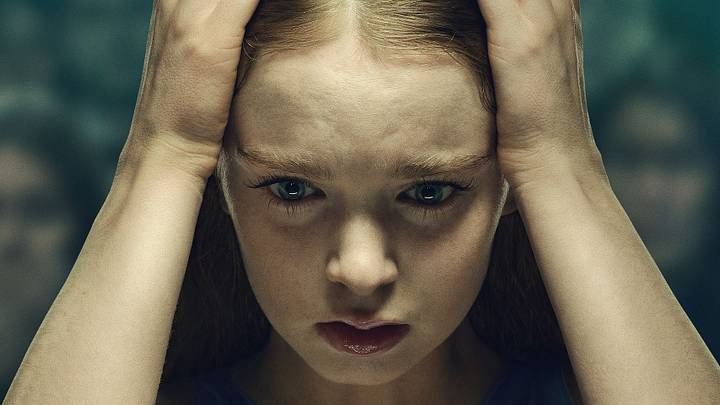
When Stephen King initially wrote the story of Carrie in the early ‘70s, it was clearly something that struck a nerve. The then-struggling writer infamously wrote the opening pages of the story, only to get discouraged and throw them away. But as King detailed in his book On Writing: A Memoir of the Craft (can’t recommend it enough, enthralling stuff), his wife at the time, Tabitha King, pulled the pages out of the trash, read them, and was so compelled by the work that she insisted he keep writing it. The resulting work became Carrie, King’s first published novel, and a bona fide cultural sensation.
The book was so successful that just a few months after its release, a film adaptation was put into production, which became the Brian De Palma-directed Sissy Spacek-starring 1976 film, Carrie. The film was a massive success and served to not only set the wheels in motion for King’s prolific writing career and the dozens upon dozens of adaptations of his written works that have been made since, but also to immortalize Carrie at this singular moment in time. Mike Flanagan’s new Carrie TV series, which just debuted on Amazon Prime, updates the setting of the story to the modern day, putting in the work to make all the meaningful changes that come with that terrain, and the results are harrowing for many reasons.
When I first read King’s novel and saw Brian De Palma’s Carrie, I was in middle school, and it was the late ‘00s. Despite the fact that more than thirty years had passed between the publication of the book, the release of the movie, and my own adolescent experiences, there was no shortage of material to relate to in either version of Carrie’s story. The tale of high school bullying and the tragedy that resulted from it was deeply affecting to me and countless others from across multiple generations, because King (who both obviously went to high school himself and worked as a teacher for years prior to getting Carrie published) had written something that felt so raw, vulnerable, and authentic to the adolescent experience.
Sure, my middle school and high school days had a bit more technology than King’s novel might account for, and I don’t recall spending many nights cruising up or down the strip with my buddies American Graffiti-style, but the core substance of my experiences and King’s (i.e., Carrie’s) experiences felt discomfortingly synonymous. To this day, when I watch Brian De Palma’s Carrie, I see a film that feels very much like my own middle school and high school memories on a foundational level.
But when I turned on the first episode of Mike Flanagan’s Carrie, I saw a high school experience that housed those same recognizable emotions but was primarily constructed of foreign concepts. Things that are entirely commonplace to the high school students of the show, such as metal detectors and school shooter drills, were outright shocking. And this is what makes the updated time period of Flanagan’s Carrie so harrowing both in the narrative and on a metatextual level: it foregrounds how much the world children are growing up in has evolved at such a rapid rate in the past handful of years.
Ingeniously, this is integrated into the very framing of the story. By having Carrie White be a young woman who has never been to high school before and is suddenly thrust into the deep end of it, audiences get both perspectives. So younger viewers who are currently in high school are able to see Carrie’s story through the eyes of Carrie’s peers (people who are accustomed to these modern realities by virtue of being exposed to them ad nauseam) while older viewers are seeing this through the same lens Carrie is as a character (with shock and horror).
When I look at the world that the high school characters are forced to occupy in 2026’s Carrie, I recognize it far less than I did the world of the mid-‘70s Carrie. Given the fact that I graduated only a decade ago, I find that more than a bit horrifying. King wrote a story that was plugged into the emotional reality of adolescence in a way that felt timeless, but Mike Flanagan’s take on Carrie explicitly anchors the tale in the here-and-now of modern reality and manages to make the world that these poor children are forced to inhabit (read: our world) one of the most horrifying elements of the series.
 Add us as a preferred source on Google