

There’s a fascinating theme that permeates the first episode of Peacock and A24’s new Friday the 13th prequel series, Crystal Lake, that is unique to the show. Since it’s set nearly a decade before the events of the first Friday the 13th film, a significant portion of its characters, events, and even aesthetic choices are tied directly to those first few films.
However, in the crafting of the first episode, writers Bryan Fuller (the original showrunner who exited years prior, but whose work was still significant enough to warrant credit here) and Brad Caleb Kane (the current showrunner) and director Michael Lennox went to great lengths to carve out space for natural predators and a coexistence with them as a recurring theme, in a way that is sure to color viewers’ perspective on the series as a whole.
Why natural predators matter in Crystal Lake

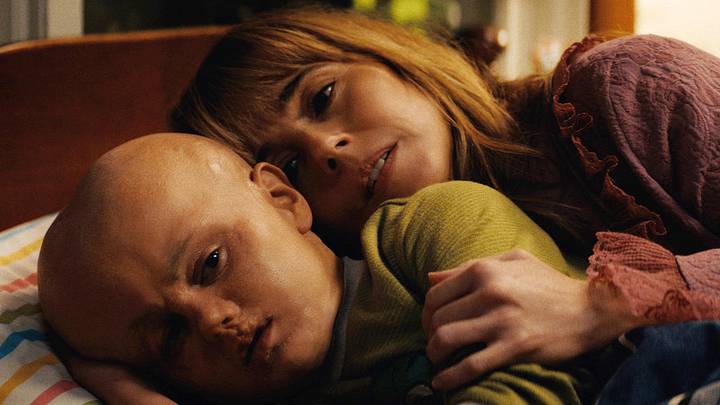
The story of Crystal Lake revolves around the relationship between Pamela and Jason Voorhees. The first episode opens in the summer of 1971, where Pamela works as a cook at Camp Crystal Lake, which Jason is attending. However, Jason accidentally drowns during some ill-advised unsupervised swimming, leaving Pamela understandably distraught.
The series then cuts to nine months later, where the camp is preparing to reopen for the summer of 1972. During this period of months, it appears that Pamela has done little to progress through the steps of grief, still very much stuck in the initial phase of denial; she is adamant that her son is “missing,” not dead. To this end, she spends much of her time at the currently-closed campgrounds, searching for her son.
The first instance of a natural predator that Crystal Lake interweaves into the story of Pamela is that of a snake. Prior to Jason’s drowning, while Pamela is cooking in the kitchen, she reaches for something on the shelf, only to be startled by a rattlesnake. She goes to grab a large butcher knife and the episode cuts away, but it’s later revealed that she actually didn’t kill the snake; she put inside the large pot she was carrying around and set it free back out into the woods.
This comes back around at the end of the episode, when after having killed two men, Pamela returns to the woods and feeds their corpses to a bear. The bear even comes up to sniff Pamela, coming face-to-face with her, much to her petrified fear, only to ultimately let her go and devour the corpses instead. So why does any of this matter? Well, it’s a fascinating way to introduce the idea of Pamela’s succumbing to the idea of murder as a natural part of a healthy ecosystem.

Viewers are well aware by the end of this episode that not only has Pamela already killed people; she is going to kill again. On top of that, viewers also know that her son, Jason, is in fact not truly dead and will go on to become one of the most famous cinematic slashers of all time.
So by introducing this thread of her coexistence alongside these natural predators and the ways in which she’s able to form these uniquely and mutually beneficial relationships with them, even in the face of fear, Crystal Lake is actively playing with the idea of her role in Jason’s development as an icon of horror within the town of Crystal Lake and beyond.
The Friday the 13th franchise is not exactly renowned for its rich thematic material, and I am very much reserving judgement on the series as a whole until completion, but I found this to be far more thought-provoking than I was necessarily expecting this series to be.
It’s still very much a Friday the 13th project, but it does also seem to have a few more hefty ideas on its mind than one might expect. Whether or not that is the result of Bryan Fuller’s initial work on the series or that of Brad Caleb Kane’s takeover feels like something that will become increasingly self-evident as the episodes wear on.
 Add us as a preferred source on Google