

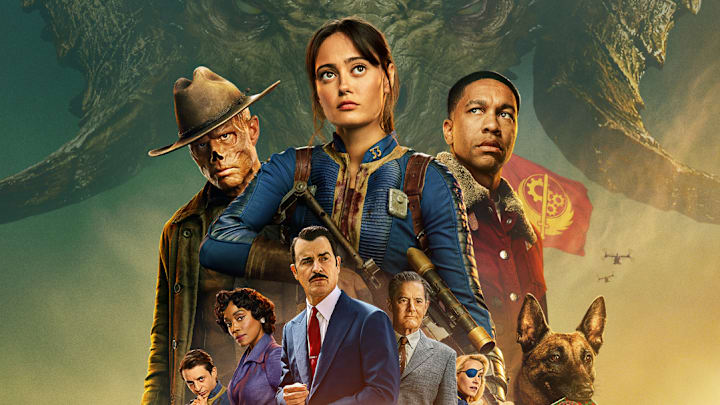
Prime Video's hit series Fallout returned for its second season in late 2025, bringing audiences back to the 1950s-inspired apocalyptic future.
Fans eagerly waited to see where the show would take Lucy, Max, and the Ghoul after the climatic cliffhanger from the season prior. While not a perfect season, Fallout season 2 progressed the story along and introduced new concepts that raised the stakes. While the conversation surrounding the show has resided largely over the plot and characters, there is one element that not enough people are talking about.
Inspired by the video game franchise of the same name, Fallout takes place in the year 2296. The world was destroyed by nuclear bombs in the 1950s, with society fractured into new divisions. In '50s-styled bunkers, Vault Dwellers live their lives underground with strict rules never to interact with the outside world. Lucy, played by Ella Purnell, ventures outside of her vault in search of her father, who had been abducted by raiders. While on the outside, she meets Maximus (Aaron Moten), a squire to the Brotherhood of Steel and a ghoul bounty hunter with a mysterious past. The Ghoul (Walton Goggins) used to be actor Cooper Howard, spokesman for Vault-Tec in the 1950s before the bombs decimated the world. In his additional 200 years of life, the Ghoul has been in search of his wife and daughter, who supposedly survived the decades after the bombs went off.
As Lucy searches for her father, she encounters radiated monsters and more vaults like her own, but each with strange defects. In the '50s, Cooper is drawn in to a plot against his wife, a high-ranking executive for Vault-Tec with secrets she's unwilling to share. The finale for season 1 was action-packed and emotionally climactic, as Lucy finds out the truth her father has been hiding. He was an agent for Vault-Tec in the '50s and now, and still plans to enact the next phase of the master plan. As he flees, the Ghoul offers her a choice—stay behind or come with him to find her father. Lucy chooses to go with him, and together, they set off for their next adventure in Las Vegas.
With a strong start to the show, fans were curious where the second season would lead. Luckily, they didn't have to wait long for the next installment. Season 2 dropped on Dec. 17, 2025, promising another season of action, mystery, and a healthy dose of the 1950s aesthetic. But there was one particular aspect of the show that fans aren't talking enough about

Fallout season 2 proves what a stellar soundtrack can do
Fallout is a standout show in many ways. The makeup for the Ghoul is phenomenal, transforming Walton Goggins into a radiated bounty hunter that looks nothing like his human self. Alongside that, the costuming is another highlight of the show. The Vault Dwellers' distinct blue and yellow suits draw from the video games and distinguish those inside the vaults from the survivors on the ground. The show's ability to blend the 1950s aesthetic with a post-apocalyptic setting speaks to the visual style Fallout has cultivated.
But while all of these factors make Fallout a great show to watch, there's one aspect not many people are talking about. It's an underrated part of the show that would leave Fallout feeling flat without it. And that is the music.
Fallout utilizes music in a creative way. Using music from decades past is not uncommon in our current day of media, as '70s and '80s music is routinely utilized for nostalgic purposes, but Fallout is different. The 1950s music doesn't just serve to display the '50s aesthetic the show carries but also sets a tone for the show.
The music is best paired with scenes of the Vault Dwellers, giving viewers this 'slice of life' feeling. But life in the vaults is not perfect, as the viewers know. All should be well, but it isn't, and the music feels like a veneer over the underlying issues the audience is learning more about. Additionally, above ground, the violent and rugged wasteland doesn't seem to match with the cheerful music paired with it. It reminds viewers of a world that was destroyed and replaced with something so brutal and despondent.
The music provides huge tonal shifts as well that can create humorous scenarios. When the characters are engaged in a battle, often with extreme violence or gore being displayed on screen, having an upbeat '50s song keeps the scene from feeling like just another action sequence. The music that plays is an intentional choice, and by including these songs that shouldn't fit what is shown on screen, it enhances the experience for viewers.
The soundtrack for season 2 is chock-full of iconic singers. Frank Sinatra, Buddy Holiday, Peggy Lee, and Chubby Checker feature on the track, as well as countless more. Each singer brings their nostalgic sound to the show, singing of an age long gone for viewers and the characters. From classic songs like Sam Cooke's "Chain Gang" or Marty Robbins' "Big Iron," the music serves the tone of the story and keeps Fallout unique from shows in the same genre.

While the 1950s soundtrack is wonderfully curated for the events of the show, it's not the only music that makes this season spectacular. The instrumental scoring for season 2 masterfully encapsulates the atmosphere of the show without words. As a person who is a fan of film and TV scores, I thoroughly enjoyed listening through the instrumental tracks after finishing the season.
The show's composer, Ramin Djawadi, is known for his work on Game of Thrones and Westworld. His approach to Fallout's score included a lot of percussion and brass instruments, creating an industrial sound. The instrumental music sounds gritty and rugged, matching the ravaged world the characters travel through. There's a rustic feeling brought out by the clanging rhythms and strong melodies that fit the western dystopian vibes of the show.
But when the show calls for quieter, emotional moments, Djawadi's score delivers. During a pivotal moment between Lucy and her father at the end of the season, the music speaks to the heartache between them. The overlapping strings feel yearning, allowing the audience to feel the weight of what has been lost. A weighty moment like that is not overshadowed by the music but amplified by it.

Why does music matter in a show like Fallout?
Whether it's a battle scene or an emotional moment, the music adds to the show—and would be completely changed without it. Music is a vital aspect of television and often enhances the viewing experience if used correctly. It can set the tone, speak to the characters or story, or create iconic moments that fans will always associate with the songs. Without music, television wouldn't be the same.
Fallout use of music demonstrates why music is a necessary part of the medium. From the familiar '50s hits to the unique instrumental scoring, music helps make this show a more enjoyable viewing experience and a unique piece of pop culture media.
While the release date for season 3 has not yet been announced, fans of the series can feel assured that they will return to this post-apocalyptic world. When the third season does drop, we'll get a whole new soundtrack that I for one cannot wait to hear.
Fallout is streaming on Amazon Prime.
 Add us as a preferred source on Google