

Apple TV took Hugh Howey’s cleverly tangled silos and turned them into one of the most talked-about dystopian stories in television history. Silo has everyone in a bind with its twists and turns, character development, and storytelling. However, adaptations are always a gamble; it’s like walking on a tightrope trying to balance the satisfaction of series-only fans and source material supporters.
As far as Apple TV's Silo goes, the show has done a tremendous job in following both Howey’s books and taking advantage of the gray areas. Although the first two seasons closely align with the source material, Silo season 3 took a massive shift, letting its creative liberties run wild. Instead of syncing with the book’s timeline, the show opted for parallel storytelling and, in doing so, altered a few key details.

Anna Thurman’s romance was sibling-swapped
Anna is Senator Paul Thurman’s daughter in the books and has a close relationship with the Keenes, though not the way portrayed in the show. The show gender-swapped Senator Thurman, so Anna is actually Rosalind Thurman’s daughter in Silo. She is introduced as working for her mother, who later gets involved in Charlotte’s recovery and the Silo project.
It's revealed in Silo season 3 episode 9 that Anna and Charlotte got married, and she has suffered from cancer over the years. It’s portrayed as a sweet love story, yet in the books, Anna was actually involved with the other sibling. That’s right, Anna Thurman was originally Daniel/Donald Keene’s obsessive girlfriend who played a crucial role in separating him and Helen.
She loved Daniel and couldn’t accept his marriage to Helen. So, she engineered a plan to put them in different silos on the day of the blast so she could be beside Daniel in Silo 1. The show completely skipped over the complicated love triangle that was an integral part of all three characters in the book.

The show has diminished Daniel’s involvement in the silo project
Donald Keene, who is renamed Daniel in the series, is a young congressman deeply influenced by Senator Thurman and his daughter. He becomes an active part of the Silo project without fully understanding the extent of its inception. In the books, he is naïve and innocent, yet in the Silo series, he is shown to be more independent and morally strong. It’s a stark contrast to Donald’s journey in the books, because his knowledge of the silo’s truth comes gradually and at great cost, especially since he was the one who helped them materialize the underground facility.
The series makes him out to be a sort of ‘outsider’ who bluntly refuses to be involved in the Silo project because he believes its foundations rest on shallow values. Silo fundamentally changed Daniel’s approach and actions regarding the main events, making him seem more indifferent towards the cynicism of the project. Ultimately, despite altering the path, Silo season 3 finally positioned Daniel where he’s supposed to be for the series' most crucial part.

Per Stenson doesn’t exist in the books
The Silo project, in the books, is primarily a secret government initiative disguised as an underground nuclear facility, led by Senator Thurman and other powerful political figures. Although that’s accurate to some extent in the series, the brains behind the operations in the show have been condensed into a completely original character.
Per Stenson is introduced as the world’s richest man, concerned for the imminent survival of the human race in case an event of mass destruction takes place. He and Rosalind Thurman are the masterminds behind the Silo project, as they believe the nanotech threat will become inevitable in the near future.
They used the Iran mission to push their project's agenda and even used Daniel’s drilling design and ideas to fast-track the silos’ construction. Evidently, what the show achieved by introducing a completely new figure into the silo concept was to distribute Paul Thurman's vindictiveness between two characters.
This way, the audience is compelled not to immediately dislike both Rosalind Thurman and Per Stenson as opposed to the absolution of Paul’s evilness in the books. Though Stenson appears only briefly in the series, he leaves a lasting impact on the viewers with his twisted sense of responsibility towards the human race. Ultimately, while book fans would have loved to see Paul Thurman in the flesh, utilizing the billionaire survivalist persona instead has aligned well with the show’s tone.

Charlotte never loses her memory
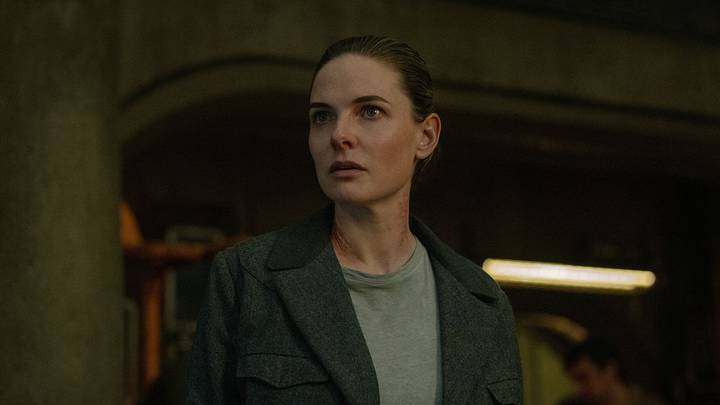
Charlotte Keene has been an integral part of the ‘past’ timeline in Silo season 3. Helen and Daniel got involved in the secret project because of her Iran mission going sideways. She’s a drone pilot in the books, and that remains her key duty even in the world of silos.
However, the show takes an incredibly drastic turn from the source material when it comes to Charlotte. Surprisingly, Charlotte’s Iran mission and memory loss arc have been exclusively created for the show. Charlotte never goes on the mission in the books, thus never getting injured or ending up at the clinic as an experiment for the memory loss drug.
It’s a subplot created entirely to facilitate the show’s emphasis, use, and explanation of the forgetting drugs in the present where Juliette’s story is taking place. The show makes it seem that Charlotte was the reason Daniel uncovered the silo project, but in reality, Charlotte’s story mostly takes place inside Silo 1, where we believe she was when the bomb went off.

The show gave Bernard a redemption arc he never got
Bernard has been one of the most intriguing characters in Silo. His arc is an immaculate product of developing a character that the viewers can both hate and love. Bernard was established as this cruel figure in the silo society who would go to any lengths to secure the underground facility's peace. However, he took a completely different turn after Juliette’s cleaning.
The interesting part here is that Bernard’s character doesn’t survive the incinerator incident in the books. He burned to death when he was sent out to clean for his crimes, but he refused to go outside. He was a villain who got what he deserved at the end of Howey’s book, but the show couldn’t let his character go.
Although Silo season 3 made it look as though he hadn’t survived, midway through the season, the series delivers one of its best plot twists. It turns out that Rob Sims saved Bernard in an attempt to work with him to stop his wife from using Vitamin D+ and to prevent the Safeguard procedure from being deployed.
Until episode 9, though severely injured, Bernard uses his knowledge to train and help Juliette to make her understand what’s at stake and how she can fight the system. Bernard, in his own twisted way, only wanted the silo to survive, but more than that, he wanted to see the outside world in all its glory.
It’s understandable why the show chose to keep Bernard, because not only did he save Juliette from Camille, but he also discovered a crucial detail about the AI voice and what it entails. This keen repositioning of such an important character pivoted the show in a favorable direction.
 Add us as a preferred source on Google