

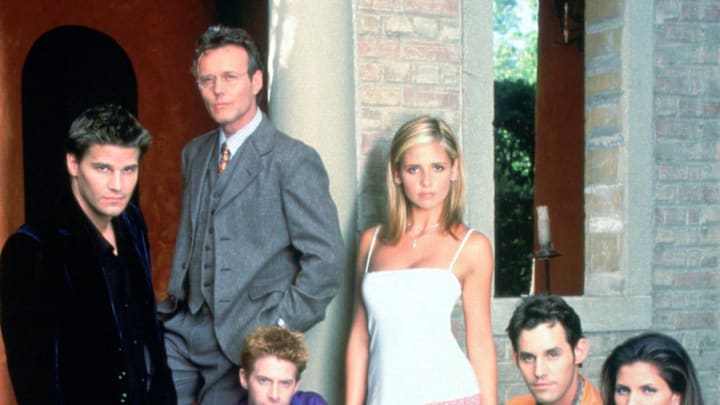
Buffy: New Sunnydale was cancelled before it even began, much to the surprise of Buffy fans. SMG took to Instagram to announce the sad news, thanking esteemed director Chloe Zhao and others involved in the highly-anticipated production.
The show was going to follow a new slayer, Nova (Ryan Kiera Armstrong), hand-picked by retired slayer Buffy Summers (Gellar).
To fans, she said, "Unfortunately, Hulu has decided not to move forward with Buffy: New Sunnydale." While she didn't give details on why, more have come out in the last few days.
Speaking with PEOPLE, the actress said, "We had an executive on our show who was not only not a fan of the original, but was proud to constantly remind us that he had never seen the entirety of the series and how it wasn't for him."
Naturally, fans of BTVS figured out who the executive was: Craig Erwich, president of Disney Television Group.
With the devastating cancellation and recent loss of Buffy alum Nicholas Brendon, fans are upset. But beyond the reboot, the cancellation has us wondering: Is the reboot era of TV dead? And if so, what caused nostalgia to die a brutal streaming death?

The nostalgia for 'better' times
The late 2010s and 2020s have seen a resurgence of old TV shows in reboots. In the era of streaming, nostalgia has hit us all like a ton of bricks, especially during COVID-19 pandemic, when all we could do was do TikTok dances, go for daily walks, and binge endless media.
With nothing to do but stay inside, the yearning for better times increased. Really, some people wanted their best years back—the 90s and the 2000s. What better way to capitalize on that success than to create an endless stream of reboots to watch?

However, streaming services and their constant output of reboots didn't go as planned. While nostalgia sells, nostalgia for old TV and its formats isn't enough to make a show, even one with a strong source material. One of the worst offenders is HBO Max's 2021 version of Gossip Girl.
The story continued where we left off in 2012, with a new generation of students at Constance Billard being targeted by an anonymous blogger in the new era of social media. The show did a good job of updating the cast to modern standards, with more diversity in characters' races, sexualities, and classes, but it still failed to make an impression. The show failed to stay culturally relevant, and none of the characters made a lasting impression as the NJBC did. Julien and Zoya, half-sisters from different worlds, had an interesting dynamic, but neither could sustain viewers' interest individually. Many of the storylines also felt performative, and yes, they were politically relevant at the time, but that was the wrong tone for the show. Gossip Girl was always about escapism and the allure of things that are unattainable to most people. The show was character-driven, but the reboot was not.
Other failed reboots have taken a different approach, bringing back original characters to try to keep the buzz alive. Pretty Little Liars: The Perfectionists and Lizzie McGuire brought back beloved original characters but still didn't last past one season for several reasons.
Reboots try to change their tone, but it doesn't work

Many of these reboots face one huge problem: a change in tone. Many shows from the 90s and 2000s were iconic at the time and staples in pop culture, but the challenges streamers and creators have faced are making them culturally relevant now. You have to balance nostalgia with modernity, which sometimes results in an overproduced, trying-too-hard product.
This was the problem with Gossip Girl. The show tried too hard to be progressive and meet every diversity quota and political plotline under the sun. For a show about filthy rich teenagers whose biggest problem is a confessional Instagram page, bringing in politics feels unrealistic. Would Julien Calloway really care about politics? We know Blair Waldorf wouldn't, unless it affected her!
Veronica Mars is another issue that had a bad change in style and tone rather than a political shift. What was unique about this show was that it was a teen noir and featured a witty, sharp teenage detective as the lead. However, when season 4 aired on Hulu in 2019, fans were shocked to find the show was darker and more adult. Yes, it does make sense because Veronica is no longer in high school, but it strayed too much from the original show's vibe.

In the PLL reboot, the show brings back Alison (Sasha Pieterse) and the beloved villain and A herself, Mona Vanderwal, but it falls flat. It's clear Mona and Ali aren't the main characters anymore; it's young college students and a murder that wreaks havoc, but that's the problem. Their characters are side plots in a story they created. Alison's disappearance drove every action in Rosewood, while Mona's torment set off a chain reaction of copycat As.
Even the casual reveal that Alison and Emily, one of the original show's central ships, got divorced, was a major let down for Emison fans. To spend years building a story and then undo it later because the other actress is not part of the reboot is cheap storytelling. Just like that, the stories that millennials watched on TV are undone by missing characters and by attempts to drive poor plots forward.
Streaming platforms and reboots don't mix
Streaming has resulted in the death of television reboots. Streaming platforms rely on data such as charts and watch time to determine the success of a show. These platforms aren't made to sustain rebooted shows for multiple seasons. In this new era, shows are no longer judged by ratings and live watching. No longer is viewer loyalty important in developing a show's fandom.
Viewers used to come back each week to watch their favourite shows live on network TV. Each episode would receive a rating based on how many thousands or millions of viewers watched it live, but not anymore. To start, people tend to watch entire seasons at once, known as binging. Pilots aren't important anymore, as audience loyalty and fandoms aren't built weekly; they're built instantly.
Take Heated Rivalry, for example. The Crave original is based on the book by Rachel Reid, but the show instantly went viral upon its release in November 2025. Yes, the episodes were released weekly, but the fandom developed over less than a month. Instantly, lead actors Connor Storie and Hudson Williams became mainstream stars and are now fixtures on Hollywood red carpets and award shows. If you compare this to Buffy, season one averaged 3.7 million viewers, and it took till season 3 for the show to hit its peak of 5.3 million viewers. Even SMG and the rest of the cast didn't become stars until the show's peak. The bingeable format and shorter episode numbers in modern TV shows mean audiences are more impatient, but they also have the capacity to make a show an overnight success through social media engagement and online conversation.
This format doesn't work for many reboots, because they have to change their slow-burn storytelling to match the modern pace of quick, one-episode storytelling. The format that made these shows successful no longer exists.
Reboots are expensive, and hard to replicate
Another reason why TV reboots are dead is that they're expensive to make and maintain. Reboots where original characters return are expensive because of high cast salaries. If streaming networks focus on reboots of old TV shows with old characters, they have to pay according to the actor's popularity.

Consider HBO's Sex and the City reboot, And Just Like That, the salaries for the three leading ladies significantly increased since the show aired in 1998. Sarah Jessica Parker, a.k.a Carrie Bradshaw herself, is an exception because she was an executive producer in the later seasons and played the leading role on the show. Let's break down the ladies' alleged salaries, then and now, according to Cosmopolitan.
Actress | Sex and The City Salary (TV) | And Just Like That/Movie Salary |
|---|---|---|
Sarah Jessica Parker | $50 million total (seasons 1-3) estimated $3.2 million (seasons 3-6) | $1 million per episode (33 million total) |
Kim Cattrall | $350,000 per episode | $7 million for first movie, $10 million for second $1 million for And Just Like That cameo |
Kristin Davis | $350,000 per episode | $1 million per episode |
Cynthia Nixon | $350,000 per episode (estimated) | $1 million per episode |
The salary jump is expensive, to say the least. If Kim Cattrall can make $1 million in a 1-minute cameo as Samantha almost 30 years after we met her character, imagine what other TV actors can earn.
Legacy series are sky-high to maintain, because the production tries to match the hype of the original show. This means bigger budgets, sets, and costumes, so more expenses to manage. Even the marketing and promotion involved will cost the network more than it did, with the expectation that the network will have a high return on its investment. More subscribers equals higher engagement. If you're planning to make a reboot with multiple seasons, this isn't sustainable for any network, especially ones like HBO and Hulu, which have multiple big shows to produce. Even with their legacy, do you really think they'd waste their big budgets on multiple legacy shows?
Reboots aren't all unsuccessful
Despite many, many unsuccessful TV reboots, there are some successful ones. Netflix's Cobra Kai acts as a direct sequel to The Karate Kid movies, over 34 years later. The show features Daniel LaRusso in a main role and has run successfully for six seasons. Dr Who (2005) developed a cult following on from the BBC's original show of the same name after concluding in 1989. The show has produced stars such as David Tennant and Matt Smith.
So that's not to say there aren't some reboots that aren't beloved by fans. Sometimes, creators can revive original feelings from a finished show and make the plot different enough to be something magical on its own.
Reboots aren't entirely dead, because streaming services are still making them. Harry Potter is being rebooted into an HBO TV show, and a One Tree Hill show is reportedly in development with Sophia Bush and Hilarie Burton. Regardless, the way reboots are packaged and sold is not sustainable for longevity on streaming platforms.
Audiences' expectations and their attention spans are different. Fans want to instantly connect with what they're watching rather than build a relationship with the show and its characters. Recognisable success from that era does nothing to guarantee a popular show in 2026. Shows need to be in cultural conversations, and if they're not discussed online, nobody cares. Reboots may still exist, but most will not last past a few seasons, because they're expensive, and viewer loyalty does not impress network executives, as seen with Buffy's final death.
 Add us as a preferred source on Google