

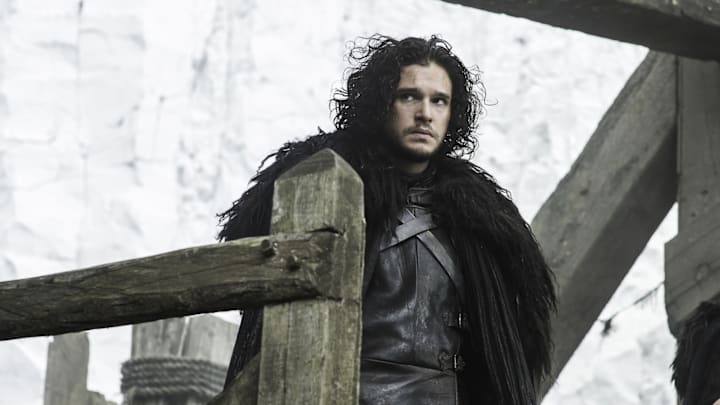
With a pair of Game of Thrones spinoff shows already to its name, the Song of Ice and Fire television universe—based on George R.R. Martin's famous novel series—comprises eleven seasons. Eight of those belong to the famous original show, Game of Thrones, while two others are from the House of the Dragon spinoff.
There's also A Knight of the Seven Kingdoms, all of these shows comprising the Song of Ice and Fire franchise. Some of these seasons undoubtedly disappoint, but for the most part, they're the absolute peak of television.

11. Game of Thrones season 8
What should have been a grand finale to television's most beloved fantasy series turned out to be a season that was riddled with ridiculous writing. Inconsistencies in the plot, out-of-character decisions, questionable lines of dialogue—around every corner of storytelling, Game of Thrones season 8 seemed to come up short. Very little about this season seemed to please the audience, be it the Long Night or the overall series finale.
While some characters like Jon and Sansa met somewhat satisfying ends, others, such as Bran and Arya, left more to be desired. There's also Daenerys, who seemed to go crazy in a mere matter of minutes, becoming the "Mad Queen" to simply expedite the plot. Everything could've made sense if production weren't so rushed. Flashy set pieces and dramatic swells of music managed to save the season with regard to critical reception, but fans were rightfully divided.

10. Game of Thrones season 7
Signaling the downfall to come, Game of Thrones season 7 was rife with confounding plot points, people going on fruitless and frankly foolhardy endeavors for the simple sake of progression, and characters spewing dialogue that went against their personalities. Lazy writing is what it boiled down to, and what's worse for season seven is that several characters were seen as poor representations of their literary counterparts. Also, where did those chains come from?
Released on HBO in 2017, this season raised more questions than it provided any answers, and in hindsight, it may have been a bad decision to reduce the episode count. This was the first season with fewer than 10 episodes, which may have been a sign for decline in quality to come. That said, there were only seven planned books by George R.R. Martin when these final seasons commenced, making seasons seven and eight account for one whole book. Even then, there wasn't sufficient time to tell the entire tale.

9. House of the Dragon season 2
Still in the lower echelon, this second House of the Dragon season failed to capitalize on the widespread success of its predecessor—at least, that was the case for fans. Critics were impressed, and in full candor, it's easy to see why. The cast was still showing up with artistry on their mind, and showrunner Ryan Condal still had a passion for the project. It's a fine season of television, just not among the franchise's best.
With a more prominent role in season two is the fan-favorite character, Alicent Hightower, played by Olivia Cooke, to a seriously impressive extent. Once again, shining as the formidable Daemon Targaryen is the impressive Matt Smith, while perhaps stealing the show was Emma D'Arcy as Rhaenyra Targaryen. D'Arcy won Best Actress in a Television Series - Drama at the 82nd Golden Globe Awards. That was one of many honors doled out to another solid season of this world-famous series. Here's hoping season 3 can step it up a notch.

8. Game of Thrones season 5
Off the bat, it’s worth noting that episode 8, “Hardhome” remains a pivotal part of the show, and as some people may forget, it was actually a diversion from the source material. This is, of course, when Jon visits the Wildling settlement that’s soon overrun by the dead, resulting in several shocking plot points and dozens of visual spectacles. It’s arguably the most fan-favorite episode the series has to offer, but all that said, the earlier episodes of season 5 represented the first time Game of Thrones showed a decline in quality.
Characters like Arya traversed respective plot points that grew rather tiresome after only a couple of episodes, while others, like Bran, were absent from the season entirely. The latter situation arose when the writers realized that Bran’s training with the Three-Eyed Raven would prove a rather dull affair, and while there may be merit to that sentiment, an episode or two would have benefited the pacing of his overall character progression.

7. House of the Dragon season 1
Aside from the pilot’s opening narration, House of the Dragon season 1 does well in establishing its characters to fans of the original series who may not be familiar with the lore. It’s about the Dance of the Dragons, an infamous war of succession in which the noble House Targaryen was slowly torn apart. These characters aren’t likely to resonate to the extent of the original lineup, but rest assured: House of the Dragon proved a valiant successor to Game of Thrones, and that’s in part thanks to the efforts of its wonderfully talented cast.
Paddy Constantine, Emma D’Arcy, Rhys Ifans, and Olivia Cooke were seriously praised for their work, along with an actor named Matt Smith for his portrayal of Daemon Targaryen. Of course, the largest takeaway from this famous prequel series would be the general presence of dragons, these creatures not only driving the show’s many wonderful set pieces, but also the politics that the characters navigate. Great show, but all that said, there’s another Game of Thrones spinoff that’s arguably even better.

6. A Knight of the Seven Kingdoms season 1
Well before Game of Thrones concluded in 2019, fans had been speculating on the ideas of possible spinoffs. Up there at the top of their wish lists was the tale of Dunk and Egg, also known as Ser Duncan the Tall and Prince Aegon Targaryen. Originally written as a series of prequel novellas by George R.R. Martin, The Hedge Knight serves as the basis for A Knight of the Seven Kingdoms season 1, which shows how a knight named Ser Duncan the Tall came to be an acquaintance of a young Targaryen prince.
Now brought to television by showrunner Ira Parker, the tale of Dunk and Egg was told to a wider audience with A Knight of the Seven Kingdoms, the franchise’s most recent spinoff. Each of its six episodes came out in 2026, encompassing more of a whimsical tone than its two live-action counterparts. It’s another valiant successor to the original adaptation, and one that’s set to continue in 2027.

5. Game of Thrones season 6
While favored by audiences, Game of Thrones season 6 suffered a bit from fan service, its writing sacrificing a sense of continuity for more exciting plot points. Characters are killed off in nearly every episode, and set pieces take place far more frequently than they did in previous seasons. Everything felt a little bit rushed, but with all that said, this sixth series of episodes was still more impressive from a straight-up storytelling standpoint than its two disappointing successors.
Highlights from season 6 include Jon’s resurrection, the Battle of the Bastards, and the shocking Hodor storyline, but much like with season five, a few character inconsistencies did come into play. People, such as Tyrion, made decisions out of character, showing how the series was sloppy in its writing throughout the final half. It could’ve been better, but all that said, there were enough heartfelt performances within a mostly engaging storyline. Season 6 was still better than most of what television had to offer back in 2016.
4. Game of Thrones season 2
After all these years, one thing that stands out about Game of Thrones season two is a larger emphasis on magic. It’s at the end of season 1 that dragons were introduced, so their presence really shines throughout this second iteration, and of course, plenty of other magical elements often came into play. Much more prevalent in this season were the general idea of White Walkers, while other creatures, such as warlocks, also proved important to the general Game of Thrones story.
Meaningful character moments arose in King’s Landing, as well as in the Riverlands. Fighting their way through those respective landscapes were Sansa and Arya Stark, two characters who proved more than capable of playing the Game of Thrones. This was also the season in which Melisandre summoned a shadow demon to murder Renly Baratheon, showcasing another magical element that added another layer of complexity to the universe’s lore.
3. Game of Thrones season 3
While the first two seasons received notable praise, it was this third series of episodes that rendered Game of Thrones something of a phenomenon. Coming out in 2013, it’s mainly remembered for featuring the infamous “Red Wedding” episode, the season’s penultimate chapter in which Robb and Catelyn Stark were murdered by the Freys. That’s perhaps the most well-known episode of the show as a whole, and even then, season three was replete with plenty of engaging storylines that deserve their own remarks.
Season 3 is when Jon and Ygritte fall in love, and Daenerys acquires an army, with scenes in both the North and in Essos providing significant action and an equal amount of emotion. None of that even touched on the King’s Landing endeavors, nor did it mention Bran’s journey to meet the Three-Eyed Raven. No matter which character may be under consideration, there’s no denying they were near the peak of their intrigue here in the show’s third season.
2. Game of Thrones season 1
Exactly 15 years ago, television changed forever thanks to Game of Thrones season 1, opening with a chilling sequence of White Walkers attacking some Night’s Watch brothers. We’re then introduced to the Starks, the Targaryens, and the Lannisters, these families becoming familiar to fans around the world by the time that season 1 concluded. Episode 9's “Baelor” changed the course of the show, and arguably, television in general, due to Ned’s beheading.
That scene is still discussed all these years down the line, a particularly shocking moment in a season that was full of surprises. Wonderful control of world-building is immediately on display—characters and locations are seamlessly introduced, and viewers will traverse several emotional dynamics that all play off one another.
Dialogue in Game of Thrones season one is as witty and well-delivered as any in TV history, delivered by actors both established and upcoming as they defined their respective careers. There’s not a dull moment throughout season one, but even then, one collection of episodes stands out as the most impressive.
1. Game of Thrones season 4
This fourth Game of Thrones season was truly top-tier television, when Arya and the Hound were eating chicken on horseback while Jon and Ygritte were preparing for war. This was also Joffrey’s death, with Tyrion Lannister being blamed and then going through a couple of life-changing experiences, what with the trial by combat and subsequent killing of his father. There was also, of course, Daenerys as her dragons grew more intimidating, along with Bran in the north as he traveled to the Three-Eyed Raven.
No matter the location or plot point they traversed, every character was undergoing meaningful development within this third season, and each of the actors undoubtedly showed up to play. Shocking and action-packed moments collided with emotionally stimulating scenes that resonate with fans more than 10 years down the line, resulting in an all-time great season of television, in general. Just refer to its many nominations and wins at the Primetime Emmy Awards for any further convincing.
 Add us as a preferred source on Google